
Child Sexual Abuse Prevention: Resources
A Message from Sameera
I have worked at the intersections of Islam and sexual health for almost two decades. In fact, I started my career teaching child sexual abuse prevention programs to students within Islamic schools in Canada. I also led parent workshops, teacher training, and professional development courses for counselors and Imams. I’ve collaborated with child protection/welfare agencies, social workers, law enforcement, and non-profit organizations. Child sexual abuse is one of the many sexual health concerns facing our communities worldwide - and is one that has long lasting impact on our soul.
Within the Muslim community, it is crucial to acknowledge this issue and actively work toward preventing it, while maintaining the soulful values and teachings of Islam to intervene as needed. Statistics show that approximately 1 in 10 children experience sexual abuse before the age of 18, with as many as 1 in 4 girls and 1 in 6 boys being impacted (Centers for Disease Control). These numbers are alarming, underscoring that child sexual abuse is far more common than many people realize.
Silence and inaction are not options; every Muslim adult has a moral and religious duty to protect and nurture the next generation. The responsibility to safeguard children extends beyond just parents—it is a collective obligation (fard kifayah) that involves families, educators, community leaders, and every member of society. Islam teaches us to uphold justice, protect the innocent, and foster a safe and supportive environment. In this light, addressing child sexual abuse is an essential part of embodying our faith and fulfilling our duty as caretakers of the vulnerable.
This page shares resources available to adults to support our Islamic responsibility to safeguard children.

A Soulful Islamic Guide: Child Sexual Abuse Prevention
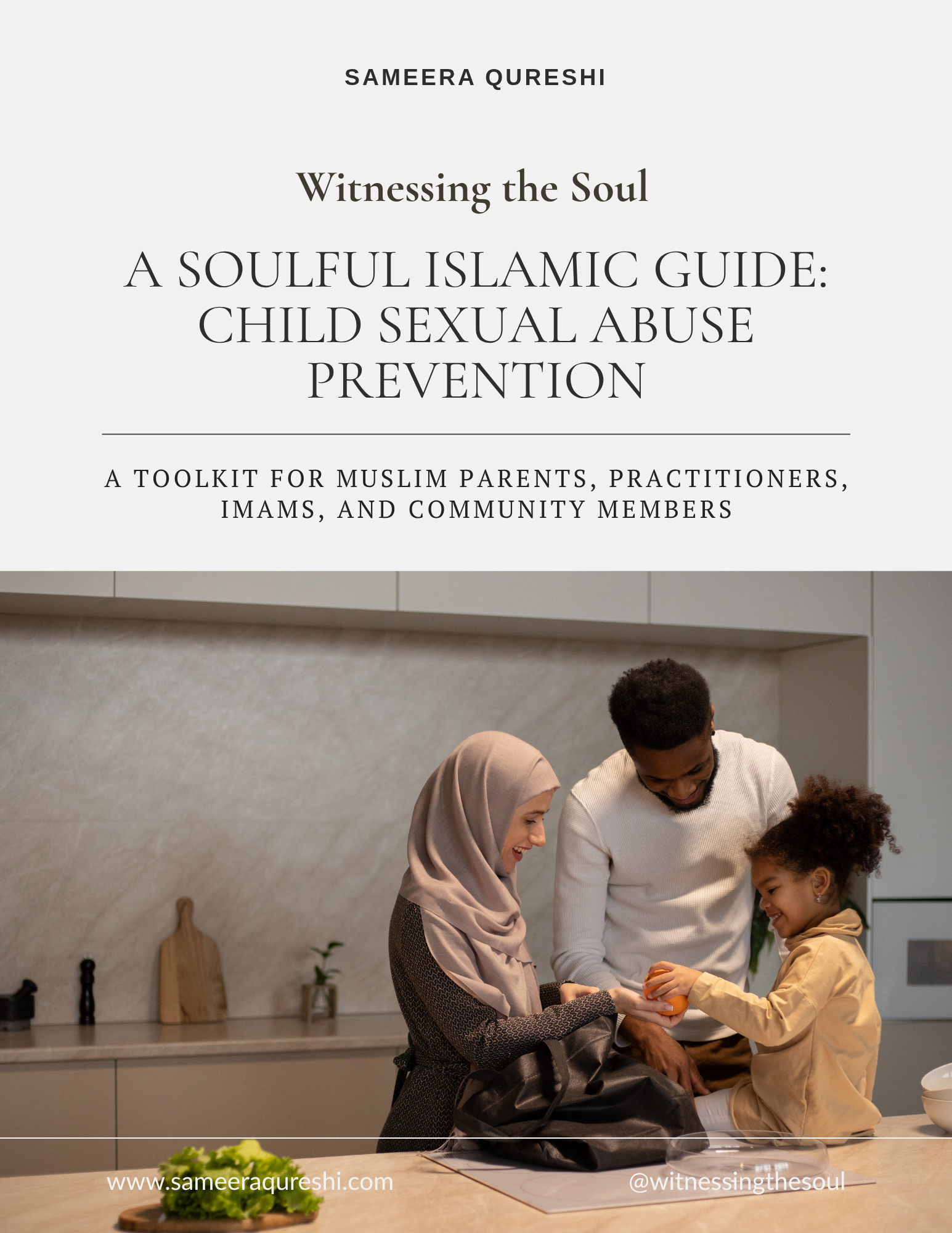
A practical toolkit for Muslim parents, practitioners, teachers, imams, and community members
A Soulful Islamic Guide: Child Sexual Abuse Prevention is a comprehensive toolkit built for Muslim parents, practitioners, imams, and community members who want practical, faith-rooted tools to protect the children in their lives. Rather than treating child protection as a purely clinical or purely religious matter, this guide weaves the two together — grounding evidence-based prevention strategies in Islamic concepts like amanah (trust), fitrah, and the sanctity of the soul, while addressing head-on the ways religious language and authority can be misused to groom and silence children. You'll find clear explanations of what abuse looks like (including non-contact and online forms), how to recognize grooming and spiritual manipulation tactics, and how to respond if a child discloses abuse — without shame, blame, or panic.
What makes this toolkit especially practical is its developmental structure: it doesn't treat "the talk" as a single event, but as an ongoing series of conversations that evolve with your child. Drawing on the well-known Islamic parenting framework of play, discipline, and friendship across three seven-year stages, the guide offers age-appropriate scripts, conversation starters, and body-safety language for toddlers through teens — from bath-time boundary talks with a four-year-old to conversations about consent, healthy relationships, and recognizing manipulation with older teens. Whether you're teaching a preschooler the correct names for body parts or helping a teenager understand red flags in relationships, this toolkit meets your family — and your community — exactly where you are.
Safeguarding Children from Abuse: Fulfilling our Islamic Responsibility
Course Description
Safeguarding Muslim children from abuse is our Islamic responsibility. Fulfilling it requires a collaborative effort grounded in both spiritual and practical guidance. Safeguarding Children from Abuse: Fulfilling our Islamic Responsibility is a four-week course designed to equip parents, community leaders, scholars, and imams to prevent, recognize, and respond to child abuse in its various forms.
Using both Islamic principles and evidence-based practices, this course provides actionable strategies for fostering safer environments in homes, communities, and institutions. Participants will explore critical issues such as common misconceptions around modesty and shame, sin concealment, and cultural conflation that hinder child protection efforts.
By the end of this course, you will walk away with the ability to:
Understand the forms, causes, and dynamics around child abuse in the Muslim community.
Respond to religious misconceptions that hinder effective prevention and response to child abuse.
Prevent and address abuse by applying an Islamic and evidence-based framework that balances values of accountability, compassion, and justice.
Implement best practices, safety education, and protective strategies to protect children from abuse in your family and community spaces.
This course was designed and facilitated as a collaboration between Angelica Lindsey-Ali, Dr, Mariam Sheibani, and Sameera Qureshi.

This transformative book offers a holistic approach to sexual health for Muslims, rooted in Islamic traditions of the soul. By addressing sexual health as an integrative journey connecting physical, emotional, and spiritual dimensions, it reframes this aspect of life as a sacred practice aligned with the soul’s connection to God.
Introducing the Soulful Sexual Health Model as a framework for navigating sexual health challenges throughout the developmental journey of the soul, Sameera Qureshi integrates Islamic values of compassion, self-accountability, and spiritual alignment into holistic frameworks for sexual health education and support.
Chapters explore foundational topics such as anatomy and puberty, empowered abstinence, marital intimacy, and parenting approaches to sexual health. Special sections address challenges like sexual trauma, infertility, parenting and sexual health education, and sexual dysfunction, offering practical and faith-centered strategies for healing and growth. This book also provides tailored guidance for professionals supporting Muslims, emphasizing the importance of integrating faith-based frameworks into their practice. Through reflective questions, personal narratives, and practical activities, readers are equipped to embrace sexual health as an essential and sacred part of their journey with God.
Intended for Muslims seeking a holistic understanding of sexual health, as well as educators, therapists, imams, and other professionals who serve Muslim communities, this book bridges the gap between contemporary sexual health needs and Islamic faith-based approaches. It is an invaluable resource for those committed to fostering healing, growth, and spiritual connection in their personal lives and professional work.
Soulful Sexual Health for Muslims

If you require more support…
Sameera offers individual and couples guidance sessions, aimed at providing reassuring, practical, and short-term support. She also works with clients on a more long-term and consistent basis through her therapy services.