
about
Meet Sameera
About Sameera
I'm Sameera — a therapist, Islamic Psychology practitioner, and author. But more than any of that, I am someone who is genuinely trying to live the Witnessing the Soul orientation myself.
This isn't a framework I developed and then stepped back from. It is what I practice daily — the pausing, the turning inward, the returning to all that is present within me. My own journey through struggle, wounding, and healing is what makes this work real, and what allows me to sit with others in theirs with genuine presence rather than clinical distance.
After almost two decades of sitting with people in their hardest places, I've come to know something clearly: most of us are living from a narrow slice of who we actually are. Not for lack of trying. Not for lack of faith. But because life, wounding, and the particular pressures of the modern world conspire to narrow us — routing everything through behavior and thought while the heart, the body, and the spirit go quietly unattended. The soul was always meant to be the seat of our lives. The Witnessing the Soul framework is an invitation back to that.
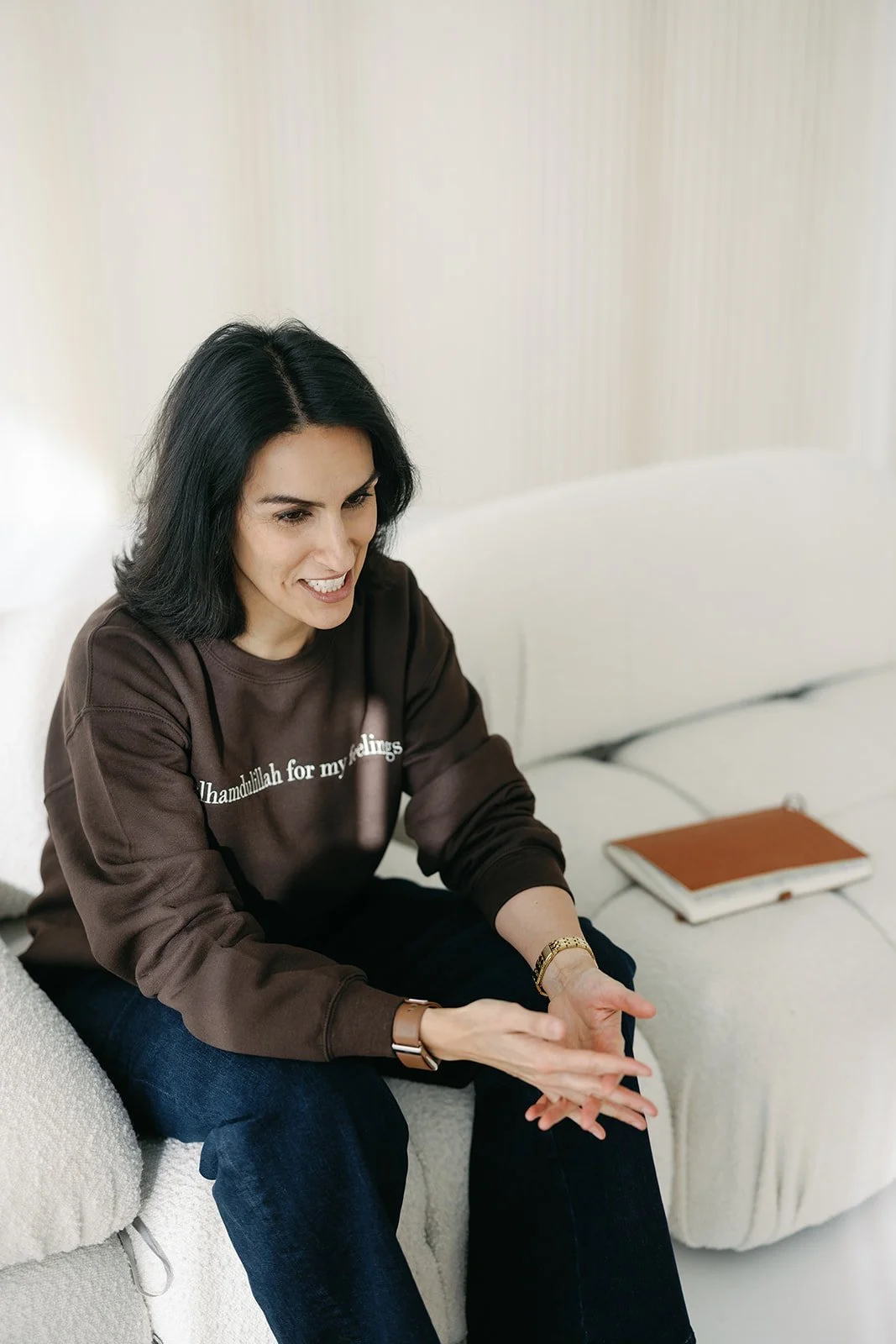
My Own Struggles
Not long ago, my therapist said something that landed as both affirmation and invitation: "Sameera, I don't know if you realize that you're now able to work through what you once found very difficult."
It named a truth about how I've grown — not by avoiding hardship, but by meeting it. Throughout my professional life, I've sought the same kind of compassionate witnessing I now offer to others: trauma therapy, couples counseling, mental health coaching, inner child work, somatic and body-based approaches, and spiritual and emotional resources that carried me when I needed support most.
Over time, I've come to understand that the way I move through my own struggles directly shapes how I sit with others in theirs. Healing, I've learned, is less about "getting rid" of pain and more about learning to stay with yourself in it — steadily, gently, and with God present.

This inner shift is what makes the outward path possible. It's the kind of change the Qur'an points to when it says:
"Indeed, Allah will not change the condition of a people until they change what is in themselves." (13:11)
For me, this verse has always been a reminder that tending to what lives within us — our pain, our patterns, our fears, our stories — is not separate from spiritual work. It is the work. When we meet ourselves with honesty and compassion, we create space for God's help, ease, and transformation to enter.
And truly, all of us struggle. Often quietly. Often while carrying far more beneath the surface than we ever name.

The Evolution of My Work
Many people know me publicly as a Muslim sexual health expert — a role that grew through years of education, therapy, workshops, and eventually the publication of my book in the summer of 2025. That work mattered, and it still does. But as that chapter expanded outward, something inside me began to shift.
I started to feel a growing gap between the expertise people associated with me and what was actually happening in my therapy room. Sexual health concerns were rarely arriving in isolation — they were arriving alongside grief, relational wounds, spiritual confusion, and early experiences that had never been named. The surface of the struggle was sexual. The roots ran much deeper.
Completing a Trauma and Somatics practitioner certificate, alongside deepening my Islamic Psychology training through the Shifa Method, clarified what I had already been sensing. And in the fall of 2025, I allowed myself to pause — to sit with the discomfort, to honor the dissonance, and to listen carefully for what my work was becoming.
What became clear was not just a clinical realization. It was a personal one. A struggle is a struggle — whether it is sexual, emotional, mental, or spiritual. Whether it lives within us or between us. Whether it is visible or hidden, loud or quiet. And all of it points somewhere deeper — to the soul, and to how fully or narrowly we are inhabiting it.
That clarity became Witnessing the Soul. Not a departure from the work I had been doing, but its fullest expression — and a way of living I recognized I had been reaching toward long before I had language for it.
Introducing Witnessing the Soul
Most of us arrive at our struggles without understanding where they came from.
We know something isn't working — in our marriages, our bodies, our relationship with God, our sense of self. But we rarely connect what's happening now to what shaped us long before we had words for it. Early experiences leave imprints on the soul. The heart carries them — quietly organizing how we feel, how we relate, how we cope, and what we believe about ourselves and about God. And over time, those imprints don't just stay in the past. They show up in the present. In our most intimate relationships. In our bodies. In the way we reach for — or pull away from — God.
But Witnessing the Soul is not only for struggle. It is for the whole of life.
We were not created to merely get through our days. We were created to inhabit them — fully, soulfully, with presence and God at the center. Witnessing the Soul is an invitation into that. Into a way of living that is awake to all dimensions of who you are — heart, body, mind, spirit — and oriented toward the wholeness God placed within you from the beginning.
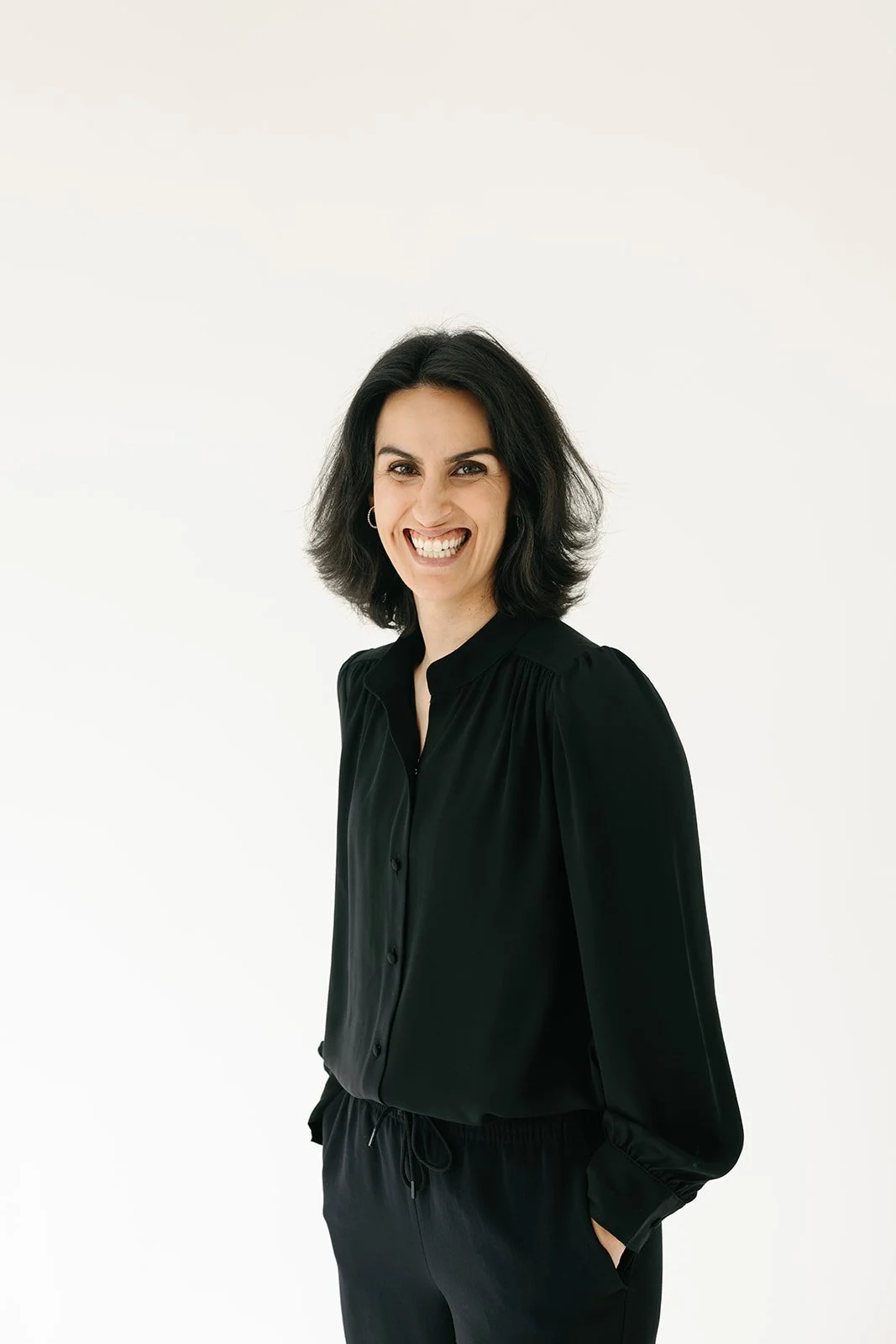
Witnessing the Soul: The Framework
The Witnessing the Soul framework is grounded in a simple Islamic truth: you are a soul first.
The qalb — the heart — is the seat of your inner life. Your fitrah — the God-given essence you were born with — cannot be destroyed, only obscured. And the soul has dimensions — our behaviors, thoughts, feelings, sensations, and spirituality — all of which are meant to be lived from, not managed or suppressed.
It moves through three ongoing movements — not as steps to complete, but as rhythms of a life well-tended:
Witnessing — turning toward your inner life with compassion and curiosity, without judgment. This is where presence becomes possible, and where everything else begins.
Returning — an ongoing orienting back toward all that is present within you, and toward the fitrah that was never lost — only waiting to be recovered.
Integrating — learning to hold what life brings without being defined by it. Your struggles are part of your journey. They are not your identity.
This orientation is grounded in Islamic Psychology, trauma and somatic science, and Occupational Therapy — which keeps the work practical, embodied, and oriented toward real life.
Where We Might Go From Here
If you're ready to understand your soul more deeply — and to begin living from more of who you actually are — you're in the right place.
My work is practical and grounded, oriented toward real change rather than insight alone. It begins from the belief that there is nothing wrong with you. You have been through something, and your soul has been carrying it. And the real, God-centered, whole version of you has always been there — underneath everything you are carrying.
If you feel called to begin, you're welcome to explore:
Therapy & Guidance Sessions — for what feels persistent, tender, or unmoving
Premarital Counseling — for couples who want to begin with their eyes open and their roots tended
My Book — Soulful Sexual Health for Muslims, a soul-centered guide to sexual health across the lifespan
Wherever you choose to begin, I’m honored to walk alongside you.
About Sameera

Sameera Qureshi is a therapist, Islamic Psychology practitioner, and author of Soulful Sexual Health for Muslims (Routledge, 2025) — the first book of its kind. For eighteen years she has supported Muslims navigating what feels stuck — emotionally, relationally, sexually, spiritually — in clinical settings, community spaces, and globally through her private practice.
Her work is grounded in the Witnessing the Soul framework — an integration of Islamic Psychology, trauma and somatic science, and occupational therapy that traces present-day struggles back to their soul-level roots. It is practical, holistic, and oriented toward the belief that healing is not about becoming someone new, but returning to what was always there.
Sameera lives in Virginia with her husband.