Sexual Desire is an Emotion. And This is Why Many of Us Struggle With It.

The Room That Went Still
I recently led a workshop on empowered abstinence, and the room was full of people who had likely heard every version of the usual guidance already — the same talks, the same reminders, the same well-worn advice about waiting and restraint — and who had come anyway. That told me something before I ever opened my slides. It told me how much they were still carrying, how much of what they'd been given hadn't actually reached the place where they needed it to land.
We were working through the landscape of shahwah — what sexual desire actually is, where it comes from, what it so often points to underneath the surface — when I advanced to a slide that said something simple:
Sexual desire is an emotion.
And it exists with our other emotions, too — grief, joy, anger, anxiety, and more.
The room went still in the way a room only goes still when something true has landed. Not the stillness of people learning something new with their minds, but the stillness of people being witnessed inside something they had been carrying alone for a long time — some of them for years, some of them since before they can remember.
That stillness is the reason I'm writing this.
Because most of us were never actually taught what desire is — we absorbed a version of it instead, piece by piece, from wherever it showed up: a khutbah, a WhatsApp forward, a hushed conversation, a lecture on modesty. And that version has shaped how we've tried to handle it. Behavioral restraint. Lowering the gaze. Fasting when it feels like too much. Reminding ourselves of God's watching, of accountability, of restraint as worship. Spiritual practice after spiritual practice, aimed at a problem we never actually diagnosed correctly in the first place.
None of that is wrong on its own. But it's aimed at sexual desire as if desire were a behavior to manage — an urge to contain, a test to pass. And so when the restraint doesn't hold, or the fasting doesn't quiet it, or the fear of God doesn't touch what's actually happening underneath, we don't conclude that the approach was incomplete. We conclude that we are. That we're weak-willed, or spiritually deficient, or somehow more susceptible than everyone else around us who seems to have it figured out.
We don't know what we don't know. And what we don't know is this: desire was never only a behavior to manage. It's an emotion — with a history, a nervous system, a relationship to everything else we carry — and no amount of managing an emotion ever taught anyone how to compassionately and curiously understand one. Which is exactly what an emotion asks of us. And exactly where we have to begin.
What Sexual Desire Carries With It
So let's begin.
If desire is an emotion, then it doesn't behave any differently than every other emotion we carry — which means it was never meant to exist in isolation. Grief doesn't show up alone. It arrives already tangled with anger, or relief, or guilt, depending on what it's grieving and who's doing the grieving. Joy is rarely just joy — it often carries a thread of disbelief, or fear that it won't last. Desire is no different. It rises up alongside whatever else is already present in us, in conversation with it, shaped by it, shaping it back.
I want to be careful here, because it would be easy to turn this into a formula — anxiety does this to sexual desire, joy does that to sexual desire — and hand you a chart to diagnose yourself with. But that's not actually true to how emotions work, and it's not true to what I've witnessed across years of sitting with people in this exact terrain. The same emotion can move desire in completely different directions in two different people. It can even move it in different directions in the same person, on different days, in different seasons of a marriage. Anxiety might quiet one person's desire entirely and heighten another's. Resentment might starve it in one marriage and, in another, somehow coexist alongside it for years before anyone notices what's actually happening underneath.
So the real question was never what does this emotion do to desire. The real question is: what information is this desire carrying with it — emotionally, historically, contextually? Because it's always carrying something. Not a formula. An imprint. Everything your soul has absorbed since the day you were born: what you learned about closeness, about safety, about your own body, about whether your needs were welcome or a burden, about whether feeling anything too strongly meant something was wrong with you. That imprint doesn't sit off to the side while desire does its own thing. It's the terrain desire moves through every single time.
This is what it actually means to say sexual desire is an emotion — it carries information the same way every emotion does, and that information is worth listening to rather than managing away.
Which is why two people can sit in the same marriage, feel the exact same emotion beside their desire — the same anxiety, the same tenderness, the same distance — and be pulled in entirely different directions by it. Not because one of them is broken and the other isn't. Because what that emotion is moving through belongs entirely to them.
And once we understand desire this way — as something carrying information, not just sensation — a harder question starts to surface. Why does so much of what we've been taught treat desire as if it belongs in a category all its own, sealed off from everything else we've just described? That's where we have to go next.
The Box We Place Sexual Desire In
If desire carries information the way every emotion does, then something doesn't add up. Because we don't treat it that way. We don't treat it like grief, or joy, or anger — emotions we at least attempt to understand as part of a larger emotional life, connected to everything else a person is carrying. Desire gets handled differently. It gets pulled out, labeled sexual, and placed in a box of its own — sealed off from the rest of us, as if it doesn't share the same nervous system, the same history, the same heart as every other feeling we've ever had.
I wrote once about how we've been examining a few trees and calling it the whole forest — mistaking the physical piece of intimacy for the entire picture, when intimacy actually moves through so much more than the body alone. This is the same mistake, just closer in. Even when we manage to widen our view of intimacy itself, desire still tends to get isolated within that wider view. It becomes the one emotion we don't extend the same curiosity to. The one we're taught to manage, contain, or justify, rather than understand.
And you can't understand something you've exiled from the rest of yourself.
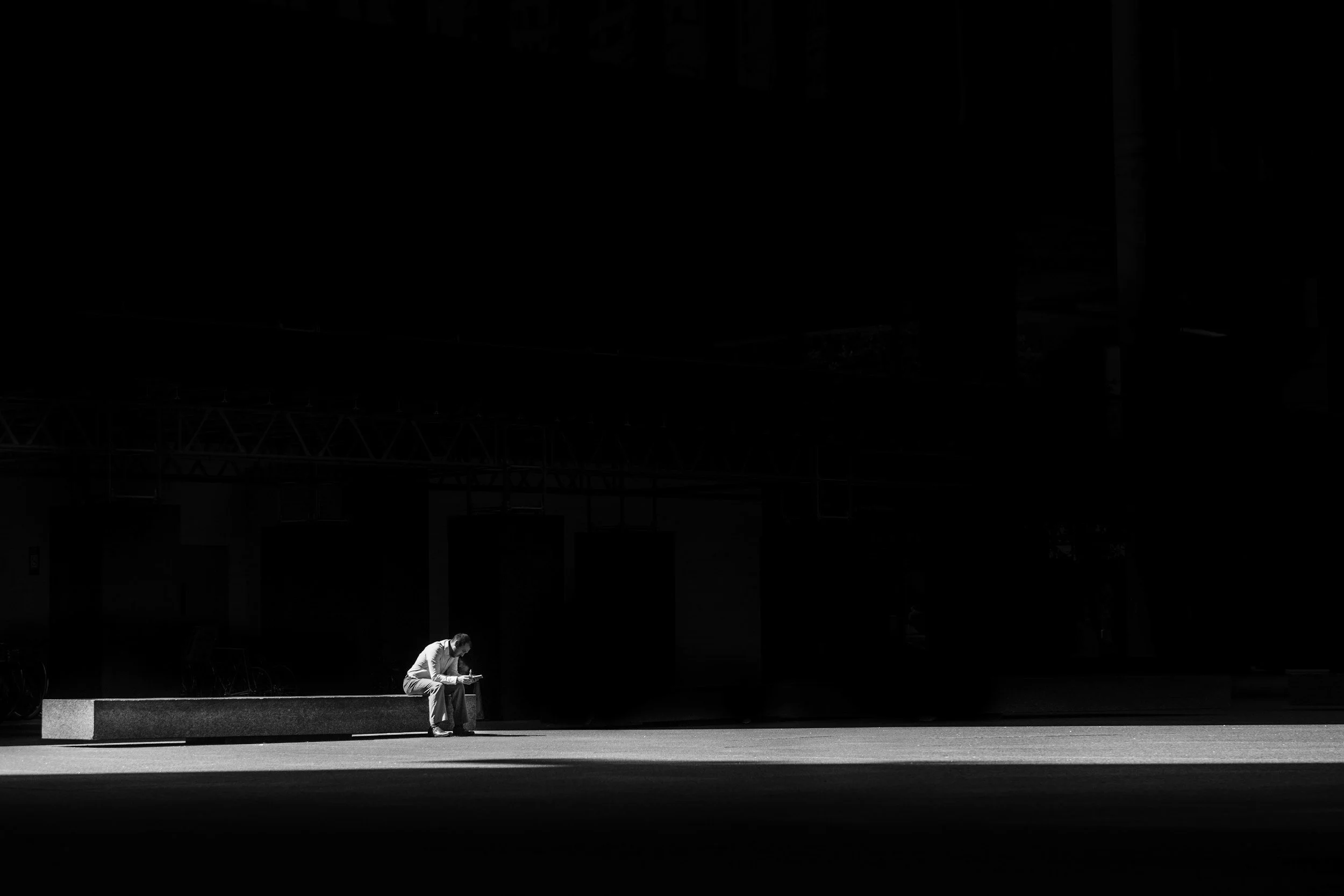
Think about how naturally we make room for other emotions to have context. Someone snaps at their spouse, and we ask what kind of day they had. Someone withdraws, and we wonder what they're grieving, or afraid of, or protecting. We assume there's a story underneath. But desire — low desire, absent desire, desire that shows up in ways that surprise even the person feeling it — rarely gets that same assumption. It gets treated as if it exists all on its own, disconnected from someone's day, their history, their nervous system, their marriage. As if it's not allowed to have a story the way everything else does.
That isolation is not a small oversight. It's the reason so many of us feel confused by our own desire, or ashamed of it, or unable to explain it even to ourselves. We were never given permission to ask what it's connected to. We were only ever taught to ask whether it's appropriate.
So if desire has been sealed off in its own box — separated even from the men and women feeling it — it's worth asking what got put in that box for us before we ever had a say. Some of what we inherited wasn't really about desire at all. It was about who is allowed to have it, how much, and under what conditions. That's where we have to go next.
The Myths We Didn't Choose
Some of what got sealed into that box was never actually about desire. It was about who is allowed to have it, how much, and under what conditions — rules that arrived long before any of us were old enough to question them, dressed up as fact, or worse, dressed up as faith.
For men, the myth runs in more than one direction, and none of them are harmless. One version says "more" desire equals more masculinity — that wanting it constantly, intensely, without pause, is proof of manhood. This version can do real damage inside a marriage: some men use it to justify their behavior and their choices, placing the blame elsewhere — often on their wives — rather than looking at what's actually driving them. Others feel the pull of that same behavior and genuinely struggle to resist it, precisely because they've absorbed the idea that desire lives in its own isolated, sexual box, disconnected from the rest of what they're feeling — which means they've never been given the tools to understand what it's actually asking of them. And underneath both of these sits a quieter, more dangerous assumption: that men simply have fewer emotional needs to begin with, that their inner lives are simpler, less layered, less in need of tending. That assumption doesn't just distort how men relate to their own desire. It teaches them, from very early on, to not expect anyone — including themselves — to ask what else they might be carrying.
Then there's the man whose desire runs "less" than expected. He carries that in private, usually with no language for what's underneath it and no permission to ask. And his wife, having absorbed the same cultural script, may reach for the language closest at hand — something is wrong with him — when what's actually happening may have nothing to do with either of their worth, and everything to do with something he's never had the chance to name out loud.
For women, the myth is calibrated differently, but it's no less confining, and in some ways it goes further. Her desire is rarely asked to simply be hers. It's measured against her husband — not too "more" (because that reads as immodest), not too "less" (because that reads as failing a duty). And underneath that measuring sits a harder question worth asking directly: does her desire even factor in, when she's expected to be sexually available on request? If fulfillment is framed as an obligation to meet rather than an experience she's invited into, then her actual desire — what she wants, when she wants it, how she experiences her own body — was never really part of the equation to begin with.
Notice what "more" and "less" are doing in every version of this. They're not neutral descriptions. They're measurements — and a measurement only means something in relation to a standard someone else set. Neither of these standards is Islamic guidance. They are cultural conditioning, dressed in the language of faith so convincingly that most of us never thought to separate the two. And the cost is the same either way — years spent measuring desire against a standard that was handed down, instead of ever getting to ask what desire is actually saying.
Which raises a real question. If we were taught what desire should look like before we were ever taught how to understand it, what would it take to actually learn the second one? Not a new set of rules to replace the old rules — a different way of relating to desire itself. That's what most of us have never been given. And that's where we turn next.
Why We Never Learned to Turn Toward Sexual Desire
If a different way of relating to desire is what we've been missing, it's worth naming exactly what that different way requires. And I don't think it's more vocabulary — more Arabic terms, more clinical language, more precise definitions of what desire is. We could hand people a hundred new words for desire and still leave them exactly where they started, because the real gap was never linguistic. It's orientational. We were never taught to turn toward desire. Only ever taught to manage it, restrain it, justify it, or fear it — every posture except curiosity.
This is where the distinction between the qalb and the fitrah matters. The fitrah — that incorruptible, God-given essence at the center of who we are — is never disturbed by desire. Desire itself is not the problem, was never the problem, was placed within us on purpose. What gets disturbed is the qalb, the heart, where all of our accumulated experience actually lives — every imprint, every fear, every unspoken rule about what's allowed and what isn't. When we were taught to fear desire itself, rather than to get curious about what it's stirring in the qalb, we were pointed at the wrong thing entirely. The fear was aimed at the fitrah, when it should have been directed toward understanding the heart.

Without a practice of turning toward it, desire only really has two places left to go. It goes silent — suppressed so thoroughly that a person genuinely loses touch with what they want, sometimes for years, sometimes for a lifetime. Or it gets acted on without ever being understood — followed, indulged, or avoided based on impulse alone, because no one ever taught the person to pause and ask what it was actually connected to before responding to it.
The turn I'm describing is simple to say and much harder to practice: I wonder what this is pointing to. Can I get curious about it, instead of immediately deciding what it means about me? That single shift — from fear to curiosity, from managing to witnessing — is the orientation so much of what we inherited never modeled for us.
And once you start looking for that orientation, you start recognizing its absence everywhere — not just in your own life, but in the people around you. In the friend who's never said a word about her own desire out loud. In the husband who assumed his silence was strength. You are not the only one who was never shown how to do this. Almost none of us were.
How The Sexual Desire Box Shows Up
I want to make something concrete, because all of this can start to feel abstract if it stays in the realm of ideas. So let me tell you what this actually looks like, in real people, in real lives.
There's the single man, trying to honor his commitment to abstinence, who feels his desire rise and immediately reads it as a moral failure in progress — something to shut down as fast as possible. What he never gets to ask is what that desire is actually an emotion about right now — loneliness, maybe, or the ache of wanting a life he doesn't have yet, or the ordinary vulnerability of being a person with a body and a heart. He's not struggling because his desire is too strong. He's struggling because no one ever taught him that an emotion is trying to tell him something, and that suppressing it or acting on it are not the only two options.
There's the single woman doing everything "right" — lowering her gaze, guarding her heart, waiting the way she was told to wait — who feels desire anyway, and interprets that as evidence that something in her is undisciplined, or impure, or not trying hard enough. No one ever told her that desire, like every other emotion, doesn't ask permission before it shows up. That she could be fully committed to her values and still feel an emotion moving through her — one worth getting curious about, not one that needed to be treated as proof of failure.
There's the woman years into her marriage, describing herself as someone who "used to want it" — as though desire were a phase she'd aged out of, rather than an emotion that had quietly gone silent under the weight of everything else she'd stopped letting herself feel. When you stop letting yourself feel grief, or anger, or disappointment, desire often goes quiet right alongside them. It was never a separate switch.
There's a version of this that shows up constantly in the comments under posts about marriage and intimacy — you can feel it in how carefully, almost apologetically, people phrase it: is it normal to feel desire and then talk yourself out of it before anything even happens? That's an emotion being managed the moment it's felt, before anyone ever asks what it's connected to.
And there's the parent who catches their teenager watching pornography — and the entire conversation that follows happens inside the sexual box alone. Punishment, shame, warnings about haraam, maybe a strained conversation about modesty that neither parent nor teenager knows how to get through. What almost never gets asked is the question that actually matters: what is this teenager's desire connected to right now? Is it curiosity about a body still changing faster than they understand it. Is it loneliness, or the ache of not yet being seen the way they want to be seen. Is it stress finding the only outlet that offered quick relief. Desire is an emotion in a teenager's life too — moving through the same imprint, the same nervous system, the same need to be witnessed rather than managed — and a parent who only has the sexual box to reach for will miss every bit of that information. They'll correct the behavior and never once meet the emotion underneath it. The box isn't just something we put around our own desire. We hand it to the next generation before they've even had the chance to understand themselves.
If any part of this feels familiar — the self-suspicion, the talking yourself out of wanting, the silence, the watching your own child through a lens you never asked to be given — you are not alone in it. In every one of these stories, the same thing was missing: no one stopped to ask what the desire, as an emotion, was actually carrying.
Which brings us to the actual practice. Not just naming what's happening, but learning to ask a different question of it — one that could have changed each of these stories, if anyone had ever taught it to them.
A Different Question to Ask
So here's the practice. Not a new set of rules, and not more vocabulary. A different orientation entirely — the one so many of the people in the last section were never given.
It starts with a single shift. Instead of why don't I want this, or why do I want this so much, or what does this say about me — all questions that jump straight to judgment — the practice is to pause and ask: what is this desire moving toward, or away from, and where did I first learn to relate to my own feelings this way?
That question does something the old questions never could. It takes desire out of its sealed, sexual box and brings it back into view alongside everything else your soul is carrying — the same nafs, the same qalb, the same imprint we've been naming this whole piece. You're not asking desire to justify itself. You're asking it to be witnessed, the same way you'd witness grief or anger or fear if a friend brought it to you.
This is what it means to trust and turn inward — to treat your own inner experience as trustworthy enough to sit with, rather than something to override the moment it appears. Not every answer arrives right away. Sometimes the honest response to what is this desire carrying is I don't know yet. That's not a failure of the practice. That's the practice — staying with the not-knowing long enough for something true to surface, rather than reaching for the fastest explanation just to make the discomfort stop.
And often, staying with it means tracing the roots. Not of the moment itself, but of the pattern underneath it. The single man who reads his own desire as failure — where did he first learn that feelings were something to be ashamed of, and not just this one? The woman who talks herself out of wanting before she's even let herself feel it — whose voice is she still hearing when she does that? The parent who reaches for suspicion before curiosity — what were they taught to fear, and by whom? Desire rarely explains itself in isolation. It almost always makes more sense once you follow it back far enough to see what it's actually connected to.
None of this asks you to arrive anywhere by yourself. This is also where witnessing with God belongs — not the fear-based watching so many of us were handed, the sense of being surveilled and found lacking, but something closer to companionship. Bringing your desire, your confusion, your questions, into that relationship honestly, rather than hiding the parts that feel hardest to admit.
And remember what we named earlier — how much of what we've inherited measures desire as "more" or "less," always against some external standard. This practice replaces that measuring with something entirely different. Not how does my desire compare, but what is my desire actually saying, on its own terms. That's not a smaller question. It's a much larger one.
This is, in miniature, exactly what turning toward desire looks like — not managed, not isolated, not measured against anyone else. Witnessed. Which is easier to describe than it is to do alone, which is exactly why I wanted to give you something concrete to actually practice with.

Something to Carry With You
Everything we've walked through so far — the imprint, the box, the myths, the practice of turning toward instead of away — is a lot to hold onto from a single reading. And I don't actually want you to hold all of it in your head. I want you to have something in your hands.
So I put together a short companion guide: Sexual Desire as an Emotion. It takes the core shift from this piece — desire as an emotion, not a behavior to manage — and turns it into something you can actually use. A myth-versus-fact breakdown of everything we've named here, so you have language for it beyond this post. And because so much of what shapes how we relate to our own desire comes from what we consume — a reel here, a khutbah clip there, a comment section we didn't mean to read all of — the guide also includes a short set of questions to ask yourself the next time you come across content about desire, intimacy, or abstinence. Something to help you tell the difference between what's actually true and what just sounds true because we've heard it so many times.
Take it with you. Reread it when you need it. And when you're ready to go further than a single post or a single guide can take you — when the question stops being what is this and becomes what do I do with what I'm learning about myself — there's a place for that too.
Where We Can Go From Here
Marriage has a way of surfacing all of this. Not because marriage creates the struggle with desire — we've spent this entire piece tracing how far back that struggle actually goes, long before any wedding — but because marriage is often the first place a person can no longer avoid it. There's someone else in the room now. Someone who notices when desire goes quiet, or shows up unevenly, or doesn't match what either of you expected. What looks like it started on the wedding night, or five years in, is very often a much older story finally finding a room quiet enough to speak in.
If anything in this piece felt familiar — the self-judgment, the silence, the box, the myths you didn't choose but somehow inherited anyway — I don't think the right response is to arrive at an answer today. I think the right response is the one we've been practicing this whole time: I wonder what this is pointing to. Can I get curious about it, instead of deciding what it means about me?
That question doesn't close a conversation. It opens one. Sometimes with yourself. Sometimes, eventually, with your spouse. And sometimes, that curiosity needs more room to unfold than a single blog post or a downloadable guide can hold.
That's what Season 1: Intimacy in Marriage is for. And I want to be clear about who it's for, because I don't think it's who you might assume. This isn't only for people who are married, or only for people who feel like something is wrong. It's for anyone curious enough to explore what's actually underneath their relationship with intimacy and marriage — married or not yet, struggling or simply wanting to understand themselves more fully before they arrive there. It's not a course on technique, and it's not a list of rules to follow instead of the ones you inherited. It's a guided practice of return — to your own emotional life, to intimacy, to the parts of yourself you were taught to manage rather than understand. If what you've read here left you with more questions than answers, that's not a sign you're behind. That's usually where the real work begins.
To learn more about Season 1, and be the first to access its offerings, sign up for my newsletter below.
